
The White moonshiners in the U.S. state of Mississippi sent a threatening message to the young Adventist Black nurse, an educator who had just started a one-room school and had been visiting Sunday churches. They warned that if she didn’t stop teaching people to quit drinking, they’d put her out of business.
Anna Knight sent back word: “When you get ready to shoot, I’ll be ready.”
It was 1898, and Adventist work in Mississippi was just beginning. In Vicksburg, The Morning Star paddlewheeler steamboat, captained by Edson White and following instructions from his mother, Ellen, had become the center of a comprehensive ministry to freed slaves and sharecroppers. Classes, lectures, and worship services were held each week on board The Morning Star. There was even a printing press on the ship on which Edson printed 75,000 copies of his book, The Coming King, which was sold to support the new work in the South.
Not content with only religious instruction, Edson White even taught crop diversification from the decks of The Morning Star. He urged Black farmers who worked on big cotton plantations to achieve greater economic self-sufficiency by raising chickens and caring for bees, as well as improving soil quality by growing peanuts, strawberries, tomatoes, and cabbage.
The ministry centered on The Morning Star spread throughout Mississippi, and indeed, throughout the South. One of those it reached was Anna Knight, daughter of a slave, who had somehow taught herself to read and had come across pamphlets produced by Adventists. Painstakingly, she began corresponding with the people who had sent her the pamphlets.
Eventually, these Adventists invited her to join them and be baptized, which she was. They then arranged for Anna to attend school in Battle Creek, Michigan. There she graduated, first from the Industrial School, and finally in 1898 from the American Medical Missionary College as a nurse.
When John Harvey Kellogg, president of the college, discovered that Anna was responding to the call to be a missionary by saying that she wanted to go back to Mississippi, he gave her what he gave other graduates: transportation costs for their return to Mississippi, a nurse’s uniform, and all the copies she needed of his book on physiology.
Anna went back home to Mississippi and started a school for all who would come in a log cabin on her uncle’s farm. Within a few months she moved the school into a new building, whose construction she herself supervised.
She taught 24 students in eight grades, in addition to traveling to Sunday schools in her region. Drawing on her Bible classes at Battle Creek and the philosophy of full gospel ministry, she taught the adults penmanship, reading, arithmetic, and cooking.
She stressed especially the need of health and temperance. Of this experience, she later wrote: “When I put up my physiology chart and showed the people what liquor drinking would do to their heart, liver, kidneys, and other organs, they got scared and stopped buying the moonshine whiskey.”
Hence the kind of warning she got from the White moonshiners.
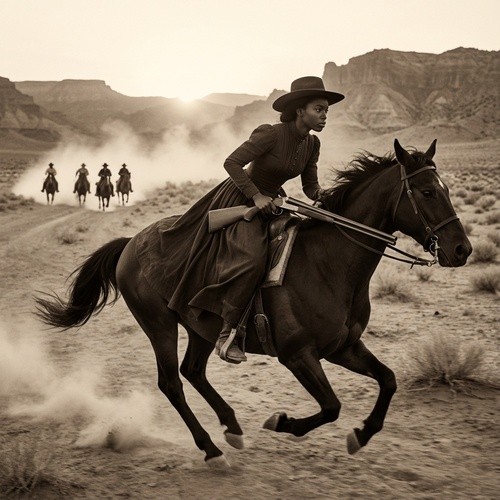
After that threatening message, Anna got herself a very fast horse and began to carry a revolver and a shotgun. An excellent sharpshooter and horseback rider, she one time even managed to ride her horse through a gauntlet of moonshiners, sliding down below the neck of the horse while they shot at her. Undaunted, she propped up her shotgun in the corner of the schoolhouse and continued teaching people about the evils of drinking.
“I took my books and gun each day and carried them to work,” she wrote. “When my enemies saw that I was not scared, but carried on my work as usual, they stopped troubling me.”
Dr. Kellogg arranged for Anna to attend the 1898 General Conference in Battle Creek that reorganized the Seventh-day Adventist denomination into its modern structure. Anna was a delegate—a voting delegate—reporting on the work she had been doing in the mission field in Mississippi.
A challenge given for foreign mission service at that General Conference session, however, caused her much wrestling. She dearly loved what she was doing in Mississippi, and had risked her life for it, but believed she should make a commitment to go to the mission field. Without even returning home to Mississippi, she arranged for her relatives to carry on the work in her classroom and traveled directly to New York City to board a steamer for India.
In 1901 Anna Knight became the first Black woman of any denomination to be sent as a missionary to India, involving herself there in what Adventists always do wherever they go: everything. “I worked in many lines,” she wrote. She extracted teeth, lanced boils and abscesses, kept the account for the mission, taught the Bible and English classes, and sold literature.
But this daughter of the Mississippi soil also believed in the principles of crop rotation, and started teaching the people how they ought to plow and mulch the land. “Well,” they said, “that might be all right in America, but it’s no good in India.”
So she got bullocks, hitched them to a good American plow, and planted rows of turnips, cauliflowers, tomatoes, beets, and other vegetables, teaching villagers just how to cultivate them.
“There was a harvest of vegetables such as had never been seen at Karmatar before,” she reported. From these beginnings, she oversaw the development in Karmatar of a medical institution, a training school, a printing press, and a church—virtually re-creating Battle Creek.
At the time of her furlough in the U.S., Anna heard that the whiskey interests in Mississippi had shut down her school. She chose not to return to India, but went back to that other mission field—Mississippi—and reopened the school, this time in the middle of her hometown.
In 1909, leaving her beloved school in the hands of her sister, Anna moved to Atlanta, Georgia, and started Sunday lectures on health, along with operating a night school at the YWCA that taught first-aid classes and home nursing. Her relationship with the YWCA, begun in India, impressed the organization by her combination of the practical and the spiritual, and they seriously considered using her as a model for a national program.
In 1932 she was named director of the Home, Health, and Missionary, Missionary Volunteer, and Education departments of the Southern Union. She also persisted in reaching out to change society. At her death in 1972, Anna Knight, 98, was serving as president of the National Colored Teachers’ Association.
Anna Knight was an Adventist heroine of social reform at a time when relatively few others were so involved. Adventists are truly Adventist when they throw themselves into challenging oppressive institutions, liberating people from disease and disability, and concretely demonstrating what that future luminous city of Revelation will really be like in which all tears will be wiped away and death will be no more.
At their finest, and Anna Knight was certainly one of these, Adventists are transformers of the world—heralds of the Holy City.
May 2009, Adventist Review. Written by Roy Branson, Associate Dean of the School of Religion at Loma Linda University
Anna Knight sent back word: “When you get ready to shoot, I’ll be ready.”
It was 1898, and Adventist work in Mississippi was just beginning. In Vicksburg, The Morning Star paddlewheeler steamboat, captained by Edson White and following instructions from his mother, Ellen, had become the center of a comprehensive ministry to freed slaves and sharecroppers. Classes, lectures, and worship services were held each week on board The Morning Star. There was even a printing press on the ship on which Edson printed 75,000 copies of his book, The Coming King, which was sold to support the new work in the South.
Not content with only religious instruction, Edson White even taught crop diversification from the decks of The Morning Star. He urged Black farmers who worked on big cotton plantations to achieve greater economic self-sufficiency by raising chickens and caring for bees, as well as improving soil quality by growing peanuts, strawberries, tomatoes, and cabbage.
The ministry centered on The Morning Star spread throughout Mississippi, and indeed, throughout the South. One of those it reached was Anna Knight, daughter of a slave, who had somehow taught herself to read and had come across pamphlets produced by Adventists. Painstakingly, she began corresponding with the people who had sent her the pamphlets.
Eventually, these Adventists invited her to join them and be baptized, which she was. They then arranged for Anna to attend school in Battle Creek, Michigan. There she graduated, first from the Industrial School, and finally in 1898 from the American Medical Missionary College as a nurse.
When John Harvey Kellogg, president of the college, discovered that Anna was responding to the call to be a missionary by saying that she wanted to go back to Mississippi, he gave her what he gave other graduates: transportation costs for their return to Mississippi, a nurse’s uniform, and all the copies she needed of his book on physiology.
Anna went back home to Mississippi and started a school for all who would come in a log cabin on her uncle’s farm. Within a few months she moved the school into a new building, whose construction she herself supervised.
She taught 24 students in eight grades, in addition to traveling to Sunday schools in her region. Drawing on her Bible classes at Battle Creek and the philosophy of full gospel ministry, she taught the adults penmanship, reading, arithmetic, and cooking.
She stressed especially the need of health and temperance. Of this experience, she later wrote: “When I put up my physiology chart and showed the people what liquor drinking would do to their heart, liver, kidneys, and other organs, they got scared and stopped buying the moonshine whiskey.”
Hence the kind of warning she got from the White moonshiners.
After that threatening message, Anna got herself a very fast horse and began to carry a revolver and a shotgun. An excellent sharpshooter and horseback rider, she one time even managed to ride her horse through a gauntlet of moonshiners, sliding down below the neck of the horse while they shot at her. Undaunted, she propped up her shotgun in the corner of the schoolhouse and continued teaching people about the evils of drinking.
“I took my books and gun each day and carried them to work,” she wrote. “When my enemies saw that I was not scared, but carried on my work as usual, they stopped troubling me.”
Dr. Kellogg arranged for Anna to attend the 1898 General Conference in Battle Creek that reorganized the Seventh-day Adventist denomination into its modern structure. Anna was a delegate—a voting delegate—reporting on the work she had been doing in the mission field in Mississippi.
A challenge given for foreign mission service at that General Conference session, however, caused her much wrestling. She dearly loved what she was doing in Mississippi, and had risked her life for it, but believed she should make a commitment to go to the mission field. Without even returning home to Mississippi, she arranged for her relatives to carry on the work in her classroom and traveled directly to New York City to board a steamer for India.
In 1901 Anna Knight became the first Black woman of any denomination to be sent as a missionary to India, involving herself there in what Adventists always do wherever they go: everything. “I worked in many lines,” she wrote. She extracted teeth, lanced boils and abscesses, kept the account for the mission, taught the Bible and English classes, and sold literature.
But this daughter of the Mississippi soil also believed in the principles of crop rotation, and started teaching the people how they ought to plow and mulch the land. “Well,” they said, “that might be all right in America, but it’s no good in India.”
So she got bullocks, hitched them to a good American plow, and planted rows of turnips, cauliflowers, tomatoes, beets, and other vegetables, teaching villagers just how to cultivate them.
“There was a harvest of vegetables such as had never been seen at Karmatar before,” she reported. From these beginnings, she oversaw the development in Karmatar of a medical institution, a training school, a printing press, and a church—virtually re-creating Battle Creek.
At the time of her furlough in the U.S., Anna heard that the whiskey interests in Mississippi had shut down her school. She chose not to return to India, but went back to that other mission field—Mississippi—and reopened the school, this time in the middle of her hometown.
In 1909, leaving her beloved school in the hands of her sister, Anna moved to Atlanta, Georgia, and started Sunday lectures on health, along with operating a night school at the YWCA that taught first-aid classes and home nursing. Her relationship with the YWCA, begun in India, impressed the organization by her combination of the practical and the spiritual, and they seriously considered using her as a model for a national program.
In 1932 she was named director of the Home, Health, and Missionary, Missionary Volunteer, and Education departments of the Southern Union. She also persisted in reaching out to change society. At her death in 1972, Anna Knight, 98, was serving as president of the National Colored Teachers’ Association.
Anna Knight was an Adventist heroine of social reform at a time when relatively few others were so involved. Adventists are truly Adventist when they throw themselves into challenging oppressive institutions, liberating people from disease and disability, and concretely demonstrating what that future luminous city of Revelation will really be like in which all tears will be wiped away and death will be no more.
At their finest, and Anna Knight was certainly one of these, Adventists are transformers of the world—heralds of the Holy City.
May 2009, Adventist Review. Written by Roy Branson, Associate Dean of the School of Religion at Loma Linda University